Buying ready-stock skincare for a small launch? Learn how to check stock by SKU, choose a label or carton, and request a quote per finished retail unit.
Suppose you want to test an eye patch under your own brand in a handful of salons. You like the formula and jar in the sample. The only change you need is your label. Ask the supplier, “How many filled, sealed jars from this batch can you allocate to my artwork?” That answer tells you more about a small first order than a factory-wide minimum.
At FUVENO, we quote ready-stock private label projects by product. The exact SKU, available quantity, branding method and delivery destination determine the minimum order, price and dispatch schedule.
What is actually in stock?
“Stock formula” can mean the supplier has a recipe ready for production. The batch may still need to be made, filled and packed. For a ready-stock order, ask which steps are already complete. Are the units filled and sealed? Are the jars or pouches unbranded? Can your label go on the retail pack itself, or is only the outer carton available for branding?
Ask for a current pack photo, the number of available retail units and the remaining shelf life of the batch being quoted. If you plan to reorder after a successful trial, also ask whether the same formula and pack can be supplied again once this lot sells through.
Choose where your brand will appear
| Branding option | When it makes sense | What to check on a sample |
|---|---|---|
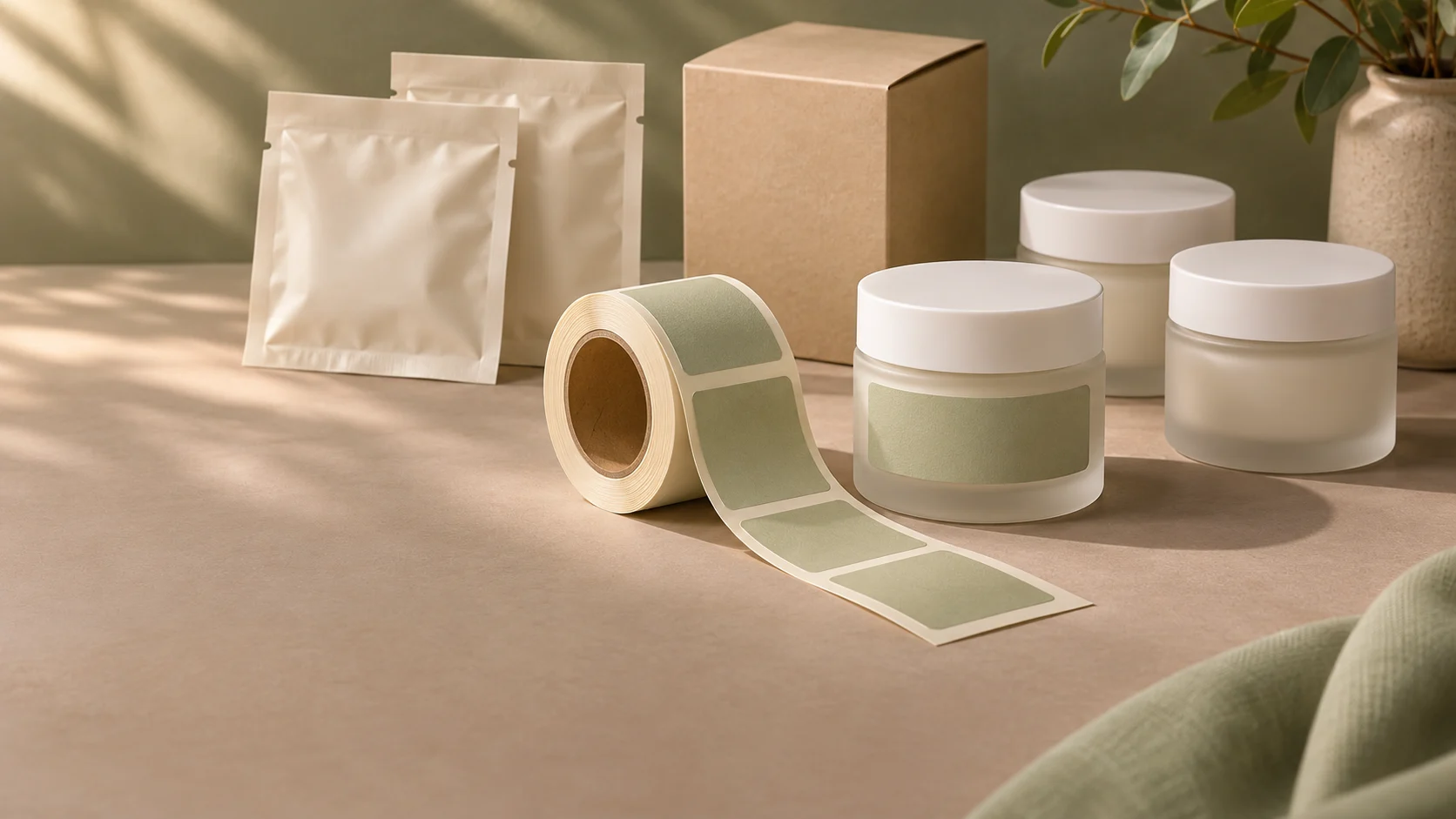
| Label on a filled jar | Your customer keeps and reuses the jar throughout the product’s life. | Check the label on the curved surface. Look for lifting edges and make sure the lot code stays readable. |
| Label on a sealed pouch | You sell patches individually or include them in a trial kit. | Check the available flat area, tear notch and seal. Ask to see the back of the pouch as well as the front. |
| Branded sleeve or carton | You sell several neutral packs together as one retail item. | Count how many packs fit inside and check what branding the customer sees after opening the box. |
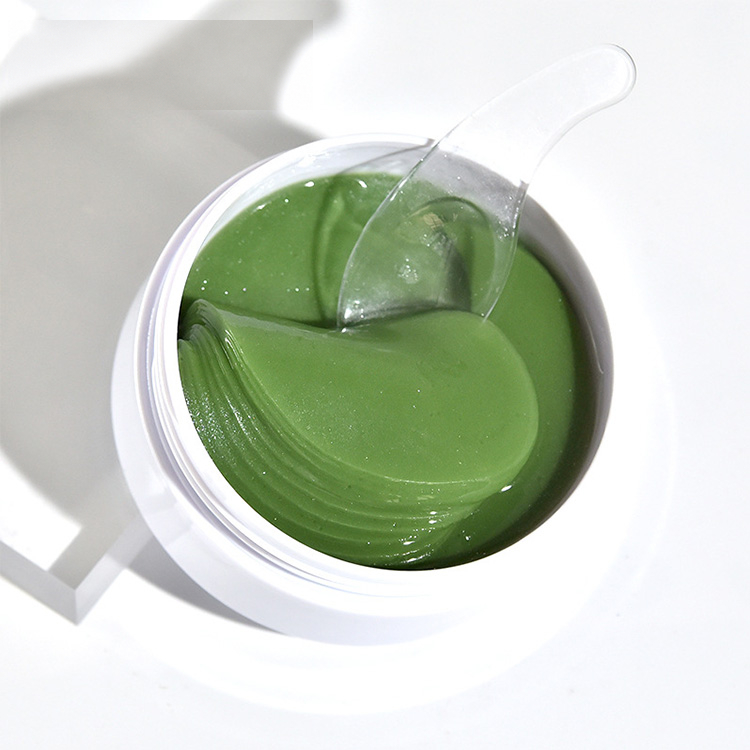
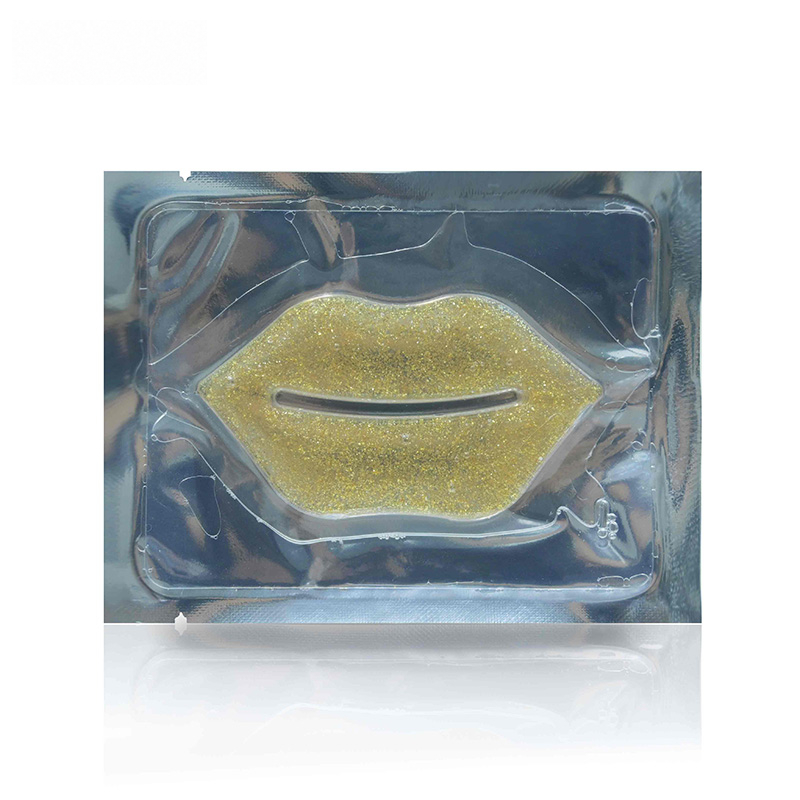
For example, when considering green tea eye patches in a jar, request the usable label dimensions for the actual jar. For a hydrogel lip patch, first confirm the available pouch format and how many pouches make up a retail pack. A catalogue photo identifies the product you mean. Availability is confirmed when you request a quote.
How much can you customize on ready-stock skincare?
For filled and sealed stock, customization starts with the accessible packaging. Your logo, label color, artwork and outer sleeve can give an existing pack your brand's appearance, subject to its dimensions and surface.
Changes to the formula, scent, patch shape or gel color require a separate production assessment. Moving a filled product into a different jar also changes the work involved. Describe these requests before ordering samples so the supplier can confirm whether existing stock fits the brief or a new batch is needed.
Prepare your logo file, intended label text and sales market alongside the product reference. Ask for the printable dimensions and a layout showing where the artwork will sit. Our packaging customization service covers the options to discuss when choosing a pack.
Can you combine products to reach a low MOQ?
A mixed order may involve several separate minimums. The supplier needs to check the quantity for each product, the label print run for each design and the carton quantity for each size. Two jars with different label dimensions can require separate artwork and print setups, even when they carry the same brand.
List each SKU with its requested quantity and pack format. Ask whether mixed products can share a shipment, how the minimum applies to each design, and whether assembly into a mixed retail set is available. FUVENO confirms these arrangements by product when quoting. A shared shipping carton and a branded retail gift set have different packing requirements, so specify which one you want.
Compare quotes per finished retail unit
For a quantity-calculation example, imagine 200 retail boxes with five pouches per box. The actual minimum for your chosen SKU is confirmed by quote. This example requires 1,000 filled pouches, 200 boxes and the work to assemble them. Putting a logo on every pouch calls for 1,000 labels. Branding only the outer box calls for 200.
Ask the supplier to itemize the product, labels, artwork setup, application, outer packaging and freight to the same destination. Divide the total by the number of finished boxes you can sell. If a printer requires more labels than the first run uses, ask who keeps the surplus and whether it can go toward your reorder. For the difference between a packaging minimum and a production minimum, see our skincare MOQ guide.
What should you approve before labeling the order?
Ask which samples are available and what each sample lets you confirm. A product sample helps you assess the texture, format and packaging. A label proof lets you review wording, dimensions and placement. If a physical labeled sample is available, use it to check how the finished retail pack looks and handles.
Check the label edges, legibility, lid clearance and access to the opening or tear notch. Keep the batch code, date information and existing product information visible. For a boxed set, confirm the piece count and how the units are held inside.
Record the approved artwork version, pack dimensions and pieces per retail unit in the order confirmation. Ask about sample fees and whether the sample comes from the stock batch being quoted.
How soon can a small private label order ship?
The dispatch schedule depends on the stock allocation and remaining packaging work. Ask for a schedule covering each of the following steps.
- Confirm the selected SKU, available quantity and order terms.
- Review samples and approve the final artwork and pack format.
- Print the agreed labels or cartons and apply or assemble them.
- Check the finished packs and confirm shipping arrangements.
Ask when stock is reserved and which approvals start the quoted lead time. Include your destination and target arrival date so transit time can be considered alongside packing time. FUVENO confirms the dispatch schedule for the selected product and branding method when quoting.
Plan the reorder while checking the first batch
Ask whether another order would use the same available lot or require fresh production. Confirm how a new batch could affect the minimum, timing and packaging options. Keep the approved sample, artwork version and pack specification as references.
If spare printed labels remain, agree on storage, ownership and how long they can be held. Before reusing them, check that the next product and pack match the approved version. Request a new stock and shelf-life confirmation when you reorder.
What to send for a small-batch quote
A short brief gives the supplier enough information to check the right stock and quote the pack you intend to sell. Adapt this example to your launch.
I’m looking for ready-stock [product or catalogue link] for sale in [market]. Please quote [quantity] finished [jars, pouches or boxes], with [number] pieces per retail unit. I’d like my logo on [jar, pouch or outer carton]. Delivery is to [city, country and postal code], and my target arrival date is [date]. Please confirm available stock, the minimum per design, sample cost, remaining shelf life and earliest dispatch after artwork approval.
Have a product in mind? Ask FUVENO for a ready-stock private label quote. If you are still choosing between a label and a printed carton, include both options in the same inquiry so you can compare them on the same quantity.
Planning a launch like this?
Our team can scope sampling, compliance, and packaging in a single reply. Typical response time is one business day.
Get in touch