A clear breakdown of minimum order quantities in skincare manufacturing — why MOQs exist, how they scale with product type, and how to negotiate for lower starting runs without losing unit economics.
The first question every brand founder asks a skincare OEM is also the most common deal-breaker: "What's your MOQ?" The honest answer is "it depends" — on the format, the packaging, and how much you're willing to compromise on customization. This guide breaks down what MOQs actually represent, why they scale the way they do, and how to structure a first order that doesn't burn your cash runway.
Why MOQs exist in the first place
A minimum order quantity isn't a sales tactic. It's the point below which the factory loses money on a run. Three costs drive every MOQ:
- Setup cost. Cleaning the line, sterilizing fill nozzles, changing over tooling. Fixed cost, spread across the run.
- Raw material minimums. Most cosmetic actives (peptides, retinoids, certain HA grades) ship in 1 kg or 5 kg drums. A 1,000-unit run might need 80g of an active — but the factory still pays for the full kilo.
- Packaging minimums. Glass jars, printed tubes, custom cartons, and aluminum lidding film almost always have their own MOQs — often higher than the product itself.
A factory quoting "3,000 units MOQ" has usually back-solved it from the highest of these three numbers.
Typical MOQ tiers by format
| Format | Typical MOQ | What drives it |
|---|---|---|
| Hydrocolloid acne patches | 3,000 boxes | Hydrocolloid roll width + carton printing |
| Sheet masks (stock substrate) | 3,000–5,000 pouches | Pouch printing minimums |
| Sheet masks (biocellulose) | 5,000–10,000 | Biocellulose culture batch size |
| Hydrogel eye patches | 3,000–5,000 boxes | Gel mixing vessel capacity |
| Microneedle patches | 5,000–10,000 | Mold cycle time + sterile packaging |
| Lip balms / sleeping masks (jar) | 3,000 units | Jar MOQ, label MOQ |
| Face creams (airless pump) | 5,000–10,000 | Pump component tooling |
Numbers above are directional — a factory that already stocks your chosen jar or pouch will quote lower; a factory that needs to order components for you will quote higher.
How MOQ scales with customization
A useful mental model: every "custom" you add to a SKU pushes the MOQ up a tier.
- Stock formula + stock packaging + printed label only → the lowest possible MOQ at a given factory.
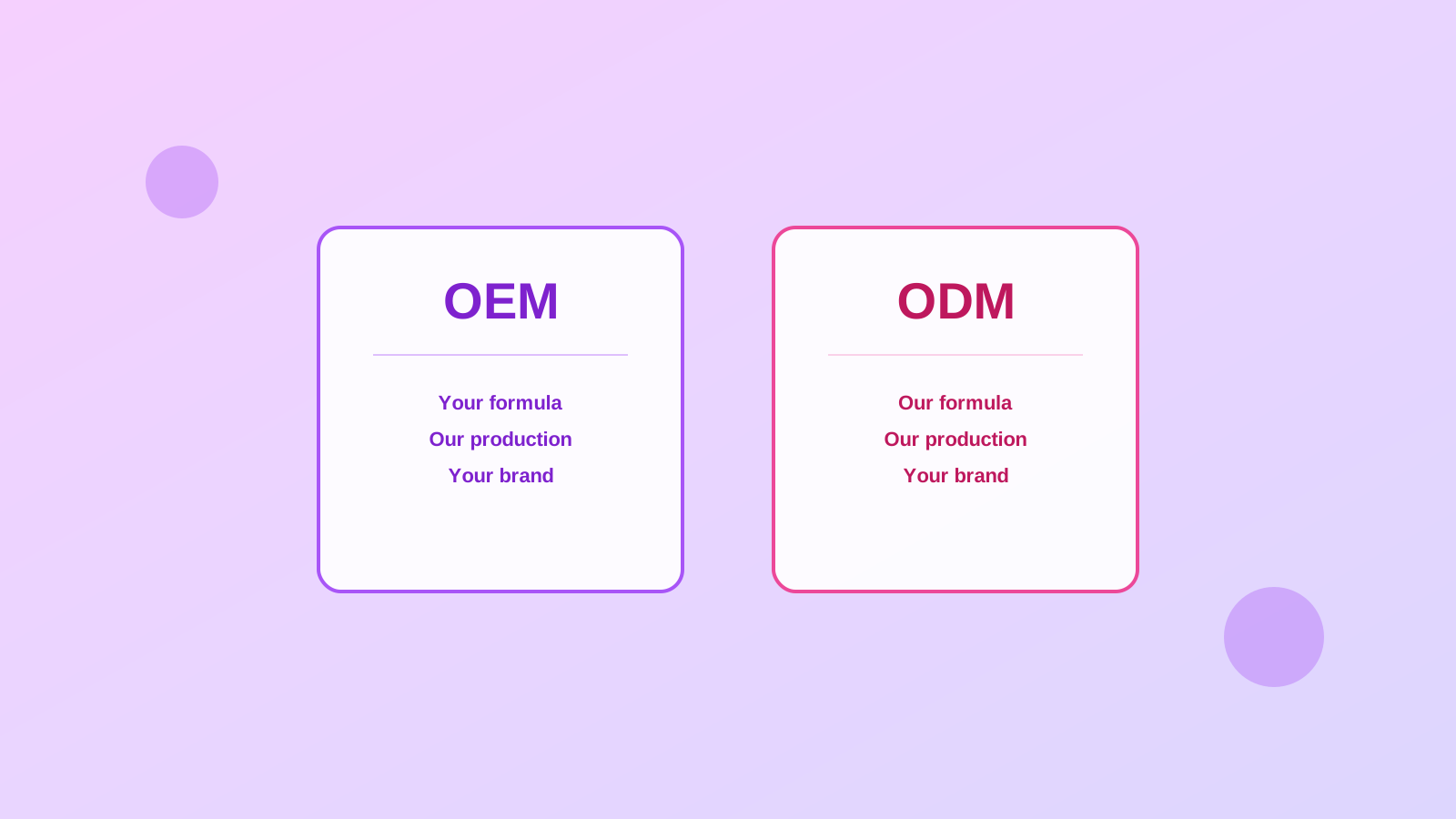
- Stock formula + custom packaging → roughly 2× the base MOQ, driven by the packaging component.
- Custom formula + custom packaging → 3–5× the base MOQ, because now R&D, stability testing, and a larger material minimum stack on top.
This is why your first order should almost always use a stock or lightly-modified formula. Save custom formulation for your second or third production run, once you have real sell-through data.
How to negotiate a lower MOQ without lying to yourself
There are legitimate ways to reduce a first-order MOQ. There are also ways that look like a win but quietly hurt you later.
Works:
- Accept stock primary packaging (stock pouches, stock tube shape). You get a lower MOQ without compromising quality — only aesthetics.
- Order two SKUs at the same time sharing the same carton size. Factories can often split a packaging run between them.
- Pre-pay a portion. Some factories will lower MOQ by 30–40% if you prepay 50% instead of the usual 30%.
Doesn't work (even if it looks like it does):
- Accepting an "MOQ of 500" from a tiny contractor. You'll get a run, but stability data, certifications, and repeatable quality almost never come with it.
- Splitting the MOQ across multiple flavors / scents. You pay more per unit because every variant triggers its own changeover.
What a healthy first production run looks like
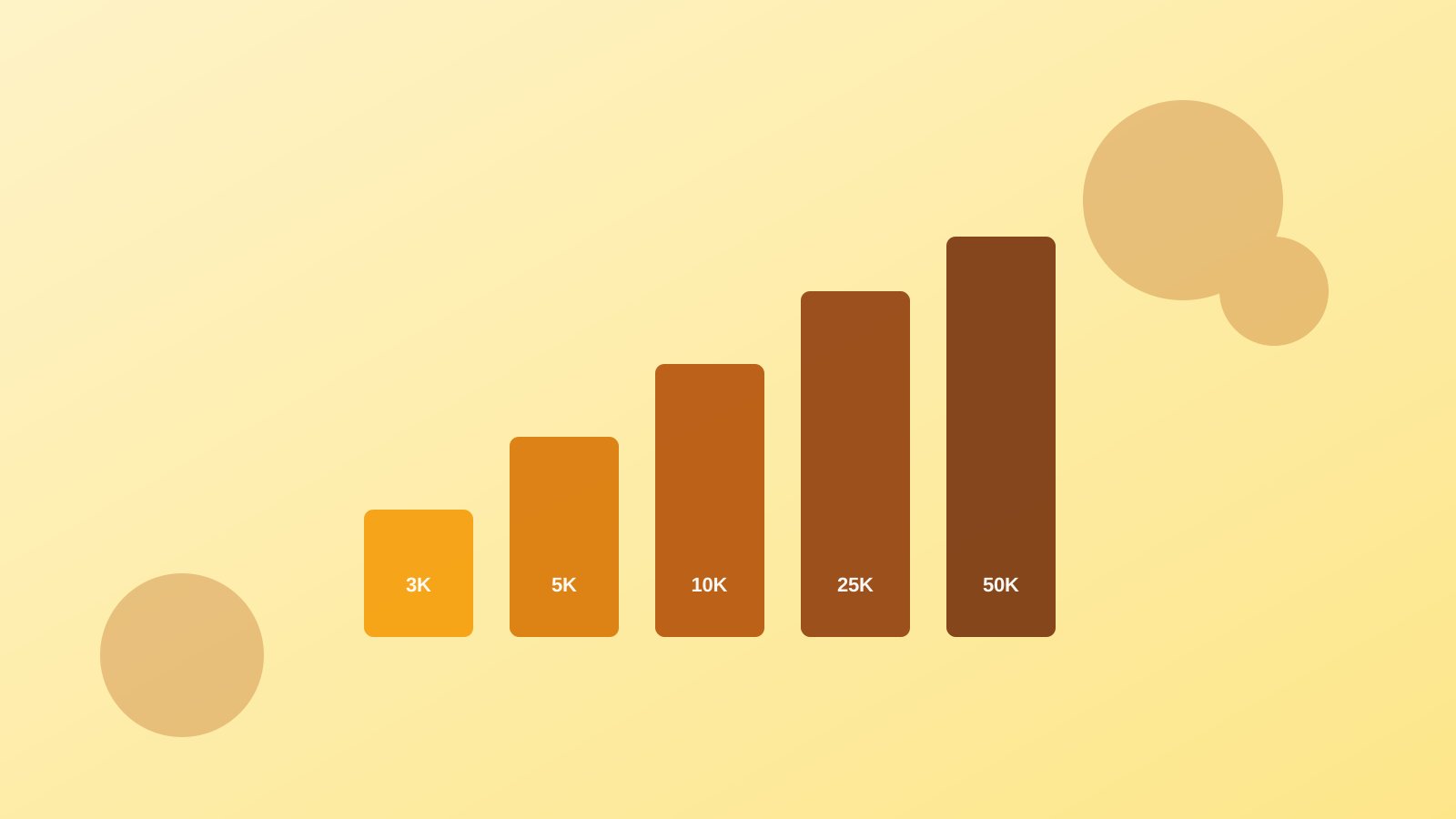
For a first-time private label brand, we typically see the best outcomes at a first-order size between 3,000 and 5,000 units of a single hero SKU. That's big enough to negotiate real terms, small enough to burn through in 3–6 months of marketing, and it gives you real sell-through data before you commit to a custom formula or custom tooling.
If you want a quote tailored to your actual format and target market, send us your brief. We'll come back with MOQ tiers, unit economics at each tier, and a recommended first-order structure within one business day.
Planning a launch like this?
Our team can scope sampling, compliance, and packaging in a single reply. Typical response time is one business day.
Get in touch